
Rewards for Children
I’m often asked if it’s a good idea to introduce rewards as an additional incentive to get children to behave well. On the face of it, it does sound like a good idea – we’re all naturally goal-seeking individuals and surely if you’re going to have to push yourself in order to achieve something, then offering a carrot may well make all the difference.
We’ve got into the habit of giving children money in exchange for good exam results at school, gold stars for brushing their teeth, ice-cream for being quiet in the back of the car and sweets or toys for simply being “good”. Rewarding and praising children – rather than punishing and disciplining – has grown in popularity to such a degree that few of us stop to question whether it’s actually a good idea. It simply ‘feels’ like good parenting, doesn’t it?
Does rewarding your child really work?
However, studies are now showing that when children expect or anticipate rewards, they can actually end up performing more poorly. They end up doing things simply to impress and they become very reliant on ‘outside opinion’ rather than developing a good sense of who and what they are.
A recent study was carried out by an American fast-food outlet – they offered prizes to children for every book they read. Initially, reading rates soared and it looked as if the project had been a great success. On closer inspection, however, it was discovered that the children were selecting shorter books and that their comprehension test-scores had plummeted. They were reading for junk food, rather than the intrinsic enjoyment of reading books. Of course, there has to be something positive to be gained out of any kind of task, otherwise there would be no point in doing it. But keeping your end goal in sight – eg. reading the book to find out what happens in the story – and making this the ‘reward’ will increase your child’s chances of getting there.
And perhaps one of the most unpalatable aspects of rewarding children’s compliance is that it reduces the relationship to “controller’ and “controlled”. Praise is a reminder that the praiser has power over them and the ability to manipulate. It diminishes a child’s sense of autonomy and keeps them small.
At the end of the day, all children love pleasing their parents and raising them be self-motivated and intrinsically happy, rather than reward-addicts and people-pleasers, is not only better for them – but also makes parenting a whole lot easier!
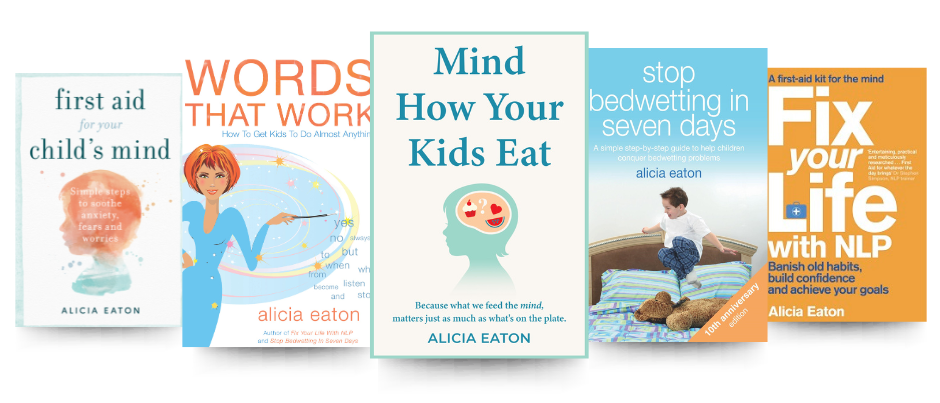
Learn more about my books “First Aid for Your Child’s Mind” and “Words That Work”.

About the Author
Alicia Eaton is a Behaviour Change Psychotherapist based in London's Harley Street for over 20 years, working with families, supporting both adults and children, helping to tackle difficult problems such as anxiety, bedwetting, eating and weight issues. She also offers advice and training to schools, teachers, clinicians and professionals working with children.
Alicia is the author of several best-selling books including ‘Stop Bedwetting in 7 Days’, recommended by NHS hospital clinics and ‘First Aid for your Child’s Mind', now published around the world in seven different languages.
Her latest book ‘Mind How your Kids Eat’ gives psychological insights into how our children learn to eat and what to do about food fussiness, sensory sensitivities, ARFID, junk food cravings and weight issues.