Is Medication for Bedwetting the Answer?
Many children who find themselves stuck with the miserable problem of bedwetting beyond the age of 7 or 8 can be referred to Enuresis Clinics by their GPs and are prescribed bedwetting medication, such as Desmopressin.
Our bodies release a hormone while we sleep called vasopressin and this concentrates the urine in our bodies and limits its production. When bedwetting children struggle to control their bladders at night, it’s often assumed that an absence of this hormone is the cause of this. The drug prescribed is a synthetic hormone that mimics the action of the real hormone.

Bedwetting medication will not work for every child
On the face of it, this sounds like a logical idea but many doctors have told me that there is no definitive test to check whether this is the case in each child and so the use of drugs such as Desmopressin is really just a ‘best guess’.
It should solve the problem pretty much immediately, if it’s going to work at all, but I have come across bedwetting medication-taking children who have been taking it for many months and some even for years, without achieving dry nights – it’s still a hit or miss affair.
More importantly, if it hasn’t worked after this length of time, it’s very likely that it’s not going to work at all and if your child is in this situation with bedwetting, I would recommend a return visit to the practitioner who prescribed it for you, with a view to stopping it altogether. It isn’t a drug that should be taken long term as it can cause some unwanted side effects.
The solution for bedwetting must come from within
I believe the solution to bedwetting has to come ‘from within’ rather than from some sort of external crutch. Just like a smoker who quits cigarettes with the aid of nicotine replacement gum, or an overweight person who loses weight by drinking diet shakes instead of eating proper food, the problem may appear to have been solved, but quickly returns once the crutch is taken away.
Only changes made on the ‘inside’ can be guaranteed to produce long-lasting results on the ‘outside’.
Of course, some children will achieve success with the help of this medication, but I’m more concerned about the ones who don’t. Too many revert to old habits within a short period and, in extreme cases, can continue to wear protective pull-up pants at night until they are teenagers.
Most children do eventually grow out of the bedwetting habit, but a small proportion will remain stuck in this cycle of behaviour and continue to wet the bed throughout their adult life. Without breaking this pattern of behaviour, the eventual effects are all too obvious.
If your child is still wetting the bed.
Bedwetting can feel frustrating and confusing, especially when it doesn’t seem to be improving.

Alicia Eaton is a Behaviour Change Psychotherapist based in London's Harley Street for over 20 years, working with families, supporting both adults and children, helping to tackle difficult problems such as anxiety, bedwetting, eating and weight issues. She also offers advice and training to schools, teachers, clinicians and professionals working with children.
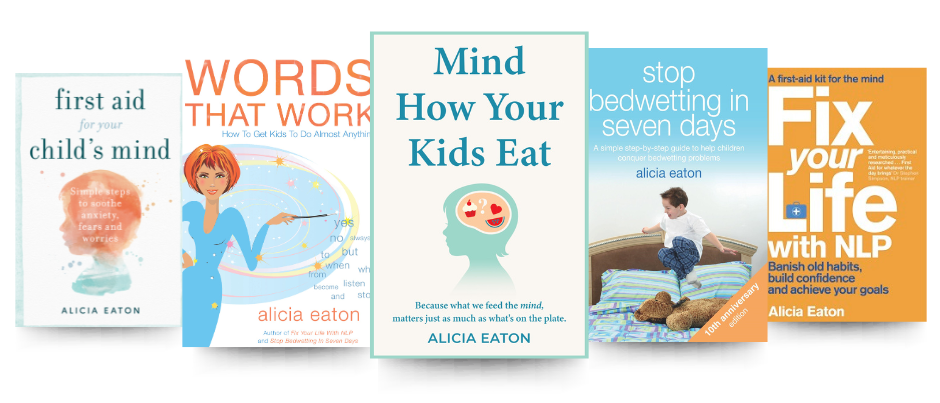
Alicia is the author of several best-selling books including ‘Stop Bedwetting in 7 Days’, recommended by NHS hospital clinics and ‘First Aid for your Child’s Mind', now published around the world in seven different languages.
Her latest book ‘Mind How your Kids Eat’ gives psychological insights into how our children learn to eat and what to do about food fussiness, sensory sensitivities, ARFID, junk food cravings and weight issues.