Do you feel as though you say NO often?
Parents can easily fall into the trap of continually saying ‘no’ to their children – especially to toddlers who are running round exploring and touching new things every minute of the day. On the face of it, there’s nothing wrong in telling your child that they can’t do something – after all, how else will they learn.
However, a survey carried out by UCLA a few years ago reported that the average one year old child can end up hearing the word “NO!” around 400 times a day. If you think that’s a slight exaggeration, bear in mind that if you’re telling your child off, you’ll probably use the word more than once – so it’s a “No, no, no….” – most likely followed up with a “How many times have I told you not to do that?”

What are the downsides of NO?
There are downsides to growing up in a home where the word “No” is over-used. Not only is it stressful (for both parent and child) to live in a negative environment but, our patterns of thinking are set from an early age. We’ve all come across adults whose conversations are peppered with negativity as they struggle to find solutions to their problems. They’re most likely to be the product of parents who always told them what NOT to do, failing to encourage their offspring to be solution-focused. So, when parents learn how to expand their vocabulary, they can actually help their child’s thinking processes to develop more fully.
Here are 5 alternatives to saying NO
Say what you DO want your child to do, rather than what you DON’T:
“No, don’t throw things around and leave your room in a mess”
“No, I told you not to push your sister around”
“No, you can’t have an ice-cream”
becomes:“Let’s leave the room tidy and put all the Lego put away in the red box.”
“Please leave your sister alone; she prefers to sit and read a book right now”
“We can eat ice-cream when we get home, after our dinner.”
Use the word ‘Stop’ instead:
When we say “No” to a child what we often want them to do, is stop whatever it is that they’re doing, so use that word instead.
“OK, let’s STOP and picture what will happen if we continue to do this”
“Let’s STOP and think for a moment. Is that a good idea?
“How about we STOP and think about what we need to do to make it all right”
Offer an alternative:
“Can we stay at the park longer?”
“We’ve already been at the park for an hour – how about we go home and do some painting instead? I noticed that you really enjoy using those new paints.”
“I want some sweets!”“We already had some sweets this morning, let’s have some strawberries instead – perhaps we can make a smoothie and crush some ice-cubes too.”
Give a reason:
Numerous studies show that children are far more likely to do as they’re told if they are given some understanding of why it is they’re being asked to do something. For example:
“That’s not a good idea right now. Crayons leave marks on the wall – let’s find some paper to draw on.” Gently remove crayons from your toddler’s hand.“Throwing bricks at your sister will hurt her. Let’s put them back down on the floor and see what we can build with them.”
“Oh, you know what happens if you eat sweets before dinner? They just don’t taste the same – for some reason, they taste better after. Now, would you like to choose which ones you’ll be eating after dinner? You can put them on a special plate so you won’t forget.”
Empathise and say “YES”:
This might seem like an odd suggestion, but it doesn’t mean that you’ll be letting your kids have free rein of the house or do as they please. Test this out, spend one whole weekend, only saying ‘yes’ and notice how much calmer and happier your home becomes.
“Can I have some ice-cream?” Reply with: “That’s a lovely idea – yes, certainly we can have some ice-cream with our supper tonight. What’s your favourite flavour by the way? Mine’s strawberry.”
“I don’t want to go home now – can’t we stay longer?” Reply with: “Ah yes, I can see that if it were up to you, we’d stay here all day. It’s hard to leave a place that you enjoy so much.” Gently lead your child by the hand in the direction you want to go in.
“Can I have some sweets?” Reply with: “Those jelly sweets certainly are delicious – I’m going to remember that you like them and put them on our shopping list for the weekend. Do you think you could draw a picture of them on our shopping list to remind me?”
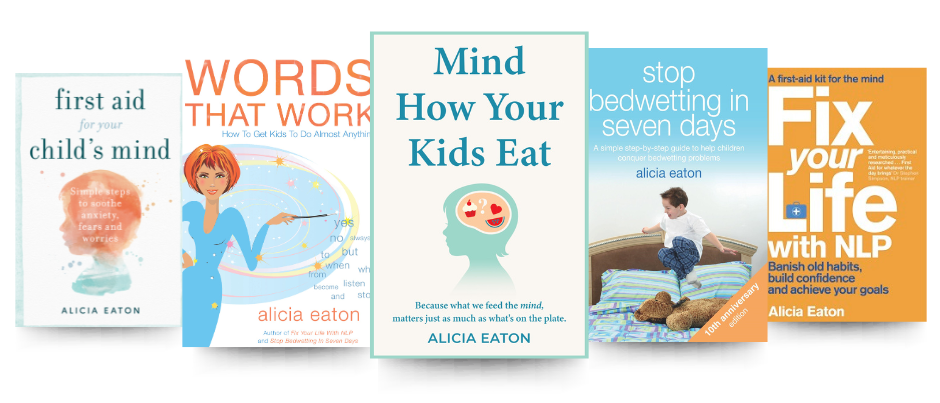
You can learn more about this topic in my bestselling book: “Words that Work: How to Get Kids to Do Almost Anything”.

About the Author
Alicia Eaton is a Behaviour Change Psychotherapist based in London's Harley Street for over 20 years, working with families, supporting both adults and children, helping to tackle difficult problems such as anxiety, bedwetting, eating and weight issues. She also offers advice and training to schools, teachers, clinicians and professionals working with children.
Alicia is the author of several best-selling books including ‘Stop Bedwetting in 7 Days’, recommended by NHS hospital clinics and ‘First Aid for your Child’s Mind', now published around the world in seven different languages.
Her latest book ‘Mind How your Kids Eat’ gives psychological insights into how our children learn to eat and what to do about food fussiness, sensory sensitivities, ARFID, junk food cravings and weight issues.