
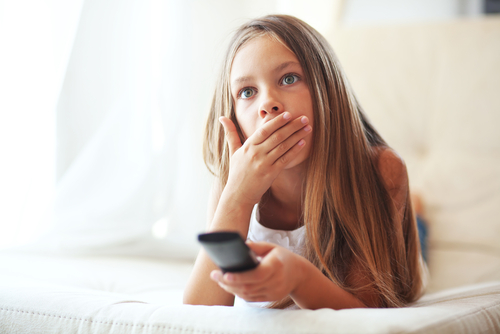
We’re a 24 hour news society with an endless stream of information filtering into our homes whether we want it or not. So when violent attacks, terrorist incidents or war situations occur and get reported on news channels it can be hard to protect our children from hearing all the gruesome details.
It’s even harder when violence breaks out in places that feel familiar such as airports, hotels and holiday destinations, it can suddenly feel a lot closer to home.
In the past, children mainly saw war reported from battlefields with soldiers dressed in uniform. Today they see footage filmed on mobile phones, families being evacuated, people who look just like them caught up in events. Even when something is happening hundreds or thousands of miles away, it can feel as if it’s unfolding just down the road.
For many parents, this sense of proximity makes conversations harder. It feels different when ordinary people on holiday are involved. And so the question arises again: what do we say to our children to help them feel safe?
Anxiety levels are at an all time high
Fear is a natural and essential human emotion: after all, being programmed with the ability to have feelings of fear is what saved our ancestors from being eaten by sabre-toothed tigers. But there aren’t too many sabre-toothed tigers for us to deal with nowadays and most of the things that we worry about never happen. We can end up feeling stressed for no particular reason. But, feelings of fear and anxiety are just that: feelings. And the good thing about feelings is that they can be changed.
1) Will this happen to me?
This is the first thought that will be running through your child’s mind. They’ll be wondering how this will impact on their own safety. Having seen nasty incidents on the TV, your child will start wondering whether this is going to be happening in the street right outside their home.
This will be especially true if your child has seen other children in danger for they’ll be able to relate to them more. Reassure your child that this is happening ‘far, far away’. Distance can be hard for children to imagine, so get a map or look it up on the internet and point out that it’s no where near their home or school.
If the incident is happening in a holiday destination, it can be trickier. Children often associate holidays with safety, fun and special family time. When violence appears in places they connect with relaxation or travel, it can blur their sense of what is safe and what isn’t.
It’s helpful to explain that millions of people travel safely every single day. The reason these incidents are shown repeatedly on the news is because they are unusual - not because they are common.
You might also explain that different countries have different governments, different security systems and different situations. What happens in one part of the world does not automatically affect our daily lives at home
2) How Does Your Child Receive Comfort?
Children don’t all calm down in the same way.
When something frightening has happened in the world, it’s not just what you say that matters - it’s how your child experiences reassurance.
Some children are soothed primarily through words. They need to talk it through, ask questions and hear calm explanations. For them, reassurance is something they hear. A steady tone of voice and clear answers help their nervous system settle.
Other children are soothed through physical comfort. They feel better when they are close to you - sitting side by side, having a hug, being tucked in carefully, or soaking in a warm bath. For them, safety is something they feel.
And some children regulate best through activity. They need to do something. That might mean kicking a football, going for a bike ride, building Lego, baking, researching maps, or looking something up to understand it better. Movement and action help discharge anxious energy.
You may notice that your child leans more naturally towards one of these ways of calming down:
Hearing reassurance
Feeling comfort
Doing something practical
When you match your response to the way your child best receives comfort, anxiety tends to settle more quickly.
2) Listen carefully
Spend extra time sitting with your child especially at bedtime and listen carefully to their concerns. Every child is different and depending on their age and temperament will have a different perspective on the news stories. It’s possible to worry your child even more by giving too much information in your conversations, so try to learn what ‘specifically’ it is that is worrying your child. It may not be as bad as you think and a simple answer may be all that’s required.
3) Adjust your language
Empathise by using phrases such as: “I can see that you’re feeling worried / scared / anxious and that’s understandable. It’s a horrible thing that has happened”.
Avoid using negative phrases such as:
– Don’t worry
– Just stop thinking about it
– Don’t keep going on about it or you’ll make it worse.
– Stop talking about it because you’re starting to scare your little brother! (Say this and don’t be surprised if ‘little brother’ starts crying.)
Our minds make pictures or images out of the words that we think or hear. Using a negative word will mean your child will end up doing exactly what you don’t want them to do – worry!
5) Reassure your child that we’re safe
Tell your child that when horrible things happen, there are lots of people who are looking after us and will keep us safe – eg. Government, Armed Forces, Police, teachers, Mums and Dads. They’ll make sure that this doesn’t happen to us and they also find the bad people and put them into prison.
Always use words that reflect the desired state, such as:
– It’s OK, we’re all safe.
– We can stay calm about this, because it’s happening far, far away.
– We can relax now, because there are plenty of people taking care of this for us.
– The situation is over now – it’s finished.
6) Use the analogy of a false alarm to explain anxiety
Liken your child’s feelings of anxiety to a smoke alarm going off when it’s got a bit too smoky in the kitchen from the cooking. The smoke alarm can’t tell the difference between a bit of smoke and a real fire – so it’s a ‘false alarm’. And sometimes when our bodies feel a bit panicky and anxious, the same kind of thing is happening. Our bodies make a bit of a ‘mistake’ and worry us for no reason – there is no real danger.
7) Extra fresh air and exercise
Watching and hearing bad news stories will increase the production of adrenaline and cortisol in the body. Ensure your child has plenty of outlets for burning these stress chemicals off. Increase the amount of exercise they take right now, preferably in the open air, otherwise their stress levels will simply keep on elevating.
8) Laughter soothes stress
Laughter is another way of changing the brain’s chemistry quickly. Watch more comedy and funny movies on TV and introduce a ‘good news’ only rule in conversations around the dinner table. Too often it’s easy to fall into the trap of sharing bad news: ‘I missed the bus this morning / got caught in the rain / got pushed over in the playground’. And if you’re short of conversation, keep a joke book to hand and get the kids to read jokes out to the family over dinner. It’s time to switch off the TV and start playing more family games.
9) Food & Anxiety
Be aware that certain foods will alter your child’s stress and anxiety levels as well as create mood swings. Now is the time to avoid the stimulating effects of sugar and caffeine in fizzy and energy drinks that will cause fluctuations in blood sugar levels. This includes natural sugars found in fruit juices and smoothies. It may be tempting to make the world seem ‘a happy place’ by introducing more chocolate, sweets and cake, but you’ll be adding to your child’s ‘wobbly’ feelings right now. Introduce more protein into the diet to help steady your child’s nerves and make them feel more grounded. Good foods to eat plenty of are: wholegrain breads rather than white, fish, turkey, chicken, cottage cheese, pulses and fruit and vegetables in general. If your child can eat nuts safely, it’s a good idea to keep some handy for snacks in between meals.
10) Breathe
Anxiety can lead to a shortness of breath. This leads to a pale complexion, sweaty hands and face, tightness in the chest and even giddiness or fainting. “Take a nice deep breath” is a traditional response and is a phrase we’re all familiar with, but taking a nice, deep breath inwards is precisely what an anxious person doesn’t need to do. Anxious feelings can be caused by having too much ‘breath’ trapped in the lungs, which gives that sensation of not being able to breathe. Your child will feel better if you ask them to ‘blow out’ instead – the air will be expelled out of their lungs and they will automatically relax and get back into an easy rhythm of breathing.
Toys that will help:
– a hand-held windmill toy with sails that needing blowing
– container of bubble mixture to blow through a wand
– blowing balloons
– blowing bubbles through a straw
or ask your child to scrunch up their hand and simply imagine that they’re blowing up a balloon or bag. Long, slow breaths is what’s required and this technique in particular, is useful in an emergency if a panic attack strikes.

About the Author
Alicia Eaton is a Behaviour Change Psychotherapist based in London's Harley Street for over 20 years, working with families, supporting both adults and children, helping to tackle difficult problems such as anxiety, bedwetting, eating and weight issues. She also offers advice and training to schools, teachers, clinicians and professionals working with children.
Alicia is the author of several best-selling books including ‘Stop Bedwetting in 7 Days’, recommended by NHS hospital clinics and ‘First Aid for your Child’s Mind', now published around the world in seven different languages.
Her latest book ‘Mind How your Kids Eat’ gives psychological insights into how our children learn to eat and what to do about food fussiness, sensory sensitivities, ARFID, junk food cravings and weight issues.
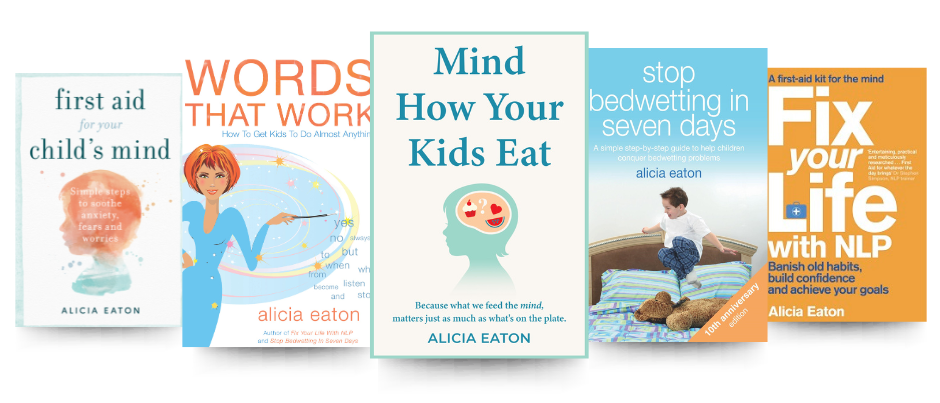
For more on the topic of children’s anxiety, take a look at my books, ‘Words that Work – How to Get Kids to Do Almost Anything’ and ‘First Aid for Your Child’s Mind’.