Every parent will be familiar with that horrible feeling of seeing their child have a last-minute attack of nerves. Whether this manifests itself as an angry tantrum, a panic attack with a flood of tears or even freezing on the spot refusing to budge, it’s a challenge to know what to do and what to say. This is even more so, if it happens in a public space, with everyone watching for of course, this puts you under even more pressure to fix the problem quickly.

Process to calm down children
First of all, do check your own feelings. If you’ve been worrying about an upcoming situation or event you run the risk of transferring this anxiety to your child. If your child can see you looking worried, they’ll mirror your state and inadvertently, you’ll be making them worry all the more.
Next, if your child starts to have a meltdown, help them to feel more secure by placing a hand on each shoulder while standing in front of them and looking at them directly using these phrases as a form of ‘verbal first aid’.
Phrases that may be helpful
I’m going to help you through this.
We’ve got this.
It feels like something is wrong, but these feelings are harmless – you are absolutely fine.
You are in control of this: you are not in danger, your brain is sending the wrong signal - and you will get through this.
You got scared about what the feelings meant; the anxiety will pass in a couple of minutes.
Breathe with me, let’s slow it down.
The worst is over and now you’ll start feeling better.
I can see it’s hard for you to get comfortable but you can slowly, allow yourself to begin feeling calmer.
As you begin to slow your breathing right down, you’ll notice how much easier things are starting to feel.
Walk with me over here so I can help you start to feel better and as you do, keep holding my hand. That’s good ….. just focus all your attention on my hand and your hand…..

About the Author
Alicia Eaton is a Behaviour Change Psychotherapist based in London's Harley Street for over 20 years, working with families, supporting both adults and children, helping to tackle difficult problems such as anxiety, bedwetting, eating and weight issues. She also offers advice and training to schools, teachers, clinicians and professionals working with children.
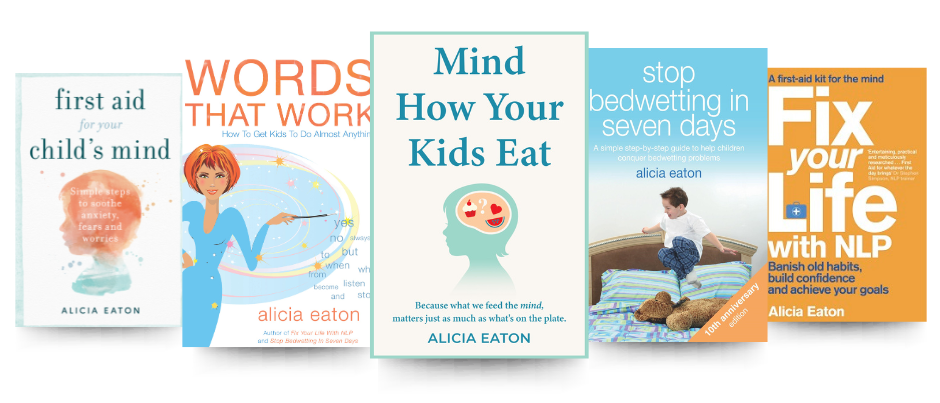
Alicia is the author of several best-selling books including ‘Stop Bedwetting in 7 Days’, recommended by NHS hospital clinics and ‘First Aid for your Child’s Mind', now published around the world in seven different languages.
Her latest book ‘Mind How your Kids Eat’ gives psychological insights into how our children learn to eat and what to do about food fussiness, sensory sensitivities, ARFID, junk food cravings and weight issues.