

Bedwetting in Children and Teenagers: How to Solve It for Good

Fed up of endless washing and smelly beds?

Want to ditch those night time pull-ups for good?

Wish your child could be confident on sleepovers?

If you answered ‘yes’ to those questions, you’re not alone!
Bedwetting - also known as nocturnal enuresis - is more common than many families realise. Latest statistics show that around 750,000 children here in the UK and over one million in the US, continue to struggle with this problem over the age of six years old.
The true figure is probably much higher as bedwetting continues to be the secret problem that no-one likes to talk about.
I’m Alicia Eaton, Behaviour Change Therapist based in Harley Street and author of the international bestselling book ‘Stop Bedwetting in 7 Days’, recommended by NHS clinics and paediatric specialists and hospitals worldwide.
I’ve been helping children and teenagers fix their bedwetting problems for over 20 years. After all these years, I’m now an expert and I certainly understand the challenges this problem creates for so many families.
I’ve developed a method for solving bedwetting that uses a calm, structured psychologically sound approach that can change the pattern of behaviour. Thousands of families around the world have used my system so we know that for many children, this does work.
Bedwetting can feel overwhelming - but it can be solved.

Bedwetting can feel exhausting and confusing - but whether your child is in primary school or a teenager, understanding what’s happening is the first step towards dry nights.
Most children will become dry at night at around the age of 5 years but for some, it continues into later childhood, through the teens and a small percentage will continue having this problem in their adult life.
This doesn’t mean the problem is permanent - but the longer the pattern continues, the more established it can become. I believe it’s possible to be trained out of a bedwetting habit - because, a habit is what it has become. With the right support, methods and guidance, most children can learn to stay dry much sooner than simply waiting for it to resolve on its own.
Waiting for your child to simply ‘grow out it’ can sometimes mean years of disrupted sleep, worry and embarrassment - for both children and parents. So, why wait?
Why do children wet the bed at night?

Bedwetting happens when a child or teenager empties their bladder during sleep without waking.
It is not due to laziness.
It is not a behavioural refusal.
And it is not a reflection of parenting success or failure.
It is usually the result of a combination of:
✔ Bladder development and signalling
✔ Sleep patterns
✔ Dehydration and constipation
✔ Emotional stress
✔ Learned night-time habits
Should You Contact Your Doctor or Paediatrician?

In most cases, bedwetting doesn’t require medical treatment, but a visit to the doctor is a good first starting place to rule out any conditions that may require treatment. It’s always sensible to make an appointment if:
• Bedwetting starts suddenly
• There are daytime symptoms
• There is pain or discomfort
• There are other health concerns
If everything is normal, a behavioural approach is often the most effective next step.
Why Alarms and Medications Don’t Always Work for everyone
It is possible to try to tackle the problem using a bedwetting alarm and this is often the recommended first treatment but some families find these inconvenient to use and may cause a bit of anxiety.
For slightly older children, doctors can prescribe medication such as Desmopressin which reduces night-time urine production. This can be helpful for short-term situations such as a sleepover or a school trip, but there can be unpleasant side effects. Most families prefer to find a more natural solution - one that helps children develop long-term bladder control.
These methods don’t always work because they:
Don’t retrain the brain and bladder to communicate (interoception)
Don’t encourage new neural pathways to develop
Don’t address the emotional stress around bedwetting
Don’t change subconscious night-time sleeping patterns
“Bedwetting can be solved by improving communication between the brain and the bladder at the same time as improving quality of sleep.”
My ‘Stop Bedwetting in 7 Days’ Method
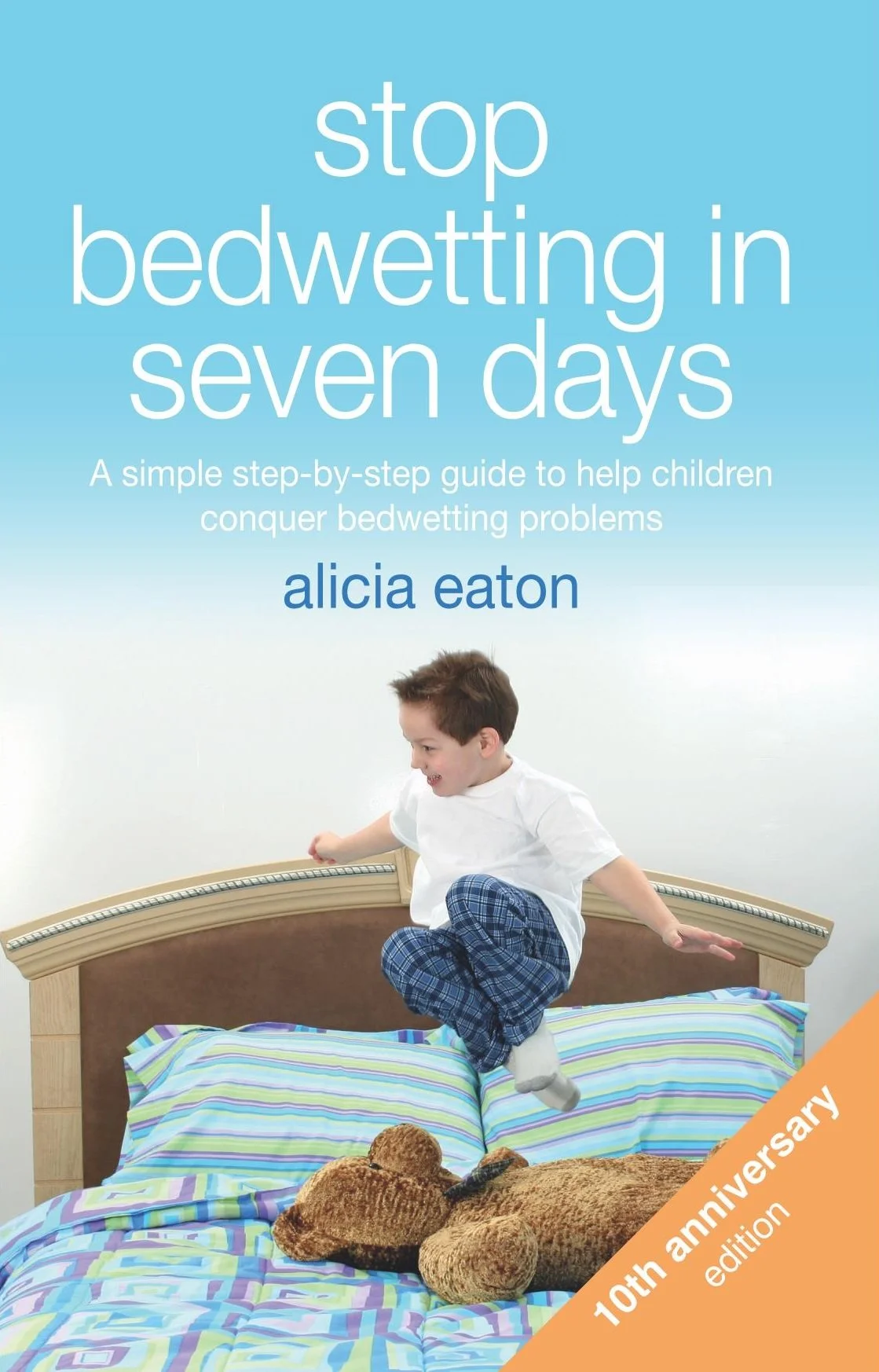
My behaviour change approach is based on neuroscience and the latest psychology for changing habits and behaviours. I created my own techniques to improve communication between the brain and bladder.
My book Stop Bedwetting in 7 Days explains the process and guides families step-by-step with helping their child or teenager become dry at night. It’s been a best-seller for over 15 years and is recommended by doctors, clinics and hospitals all around the world.
I’ve also created online programmes for both children aged 5-12 years and teenagers and young adults, to make solving this problem so much easier.