

The online therapeutic programme that helps children and teenagers overcome toilet anxiety and stool withholding.
A structured, parent-led programme to help your child feel safer, become more aware of their body and grow more comfortable using the toilet.
Created by Alicia Eaton, award-winning Harley Street behavioural psychotherapist, hypnotherapist and parenting author.
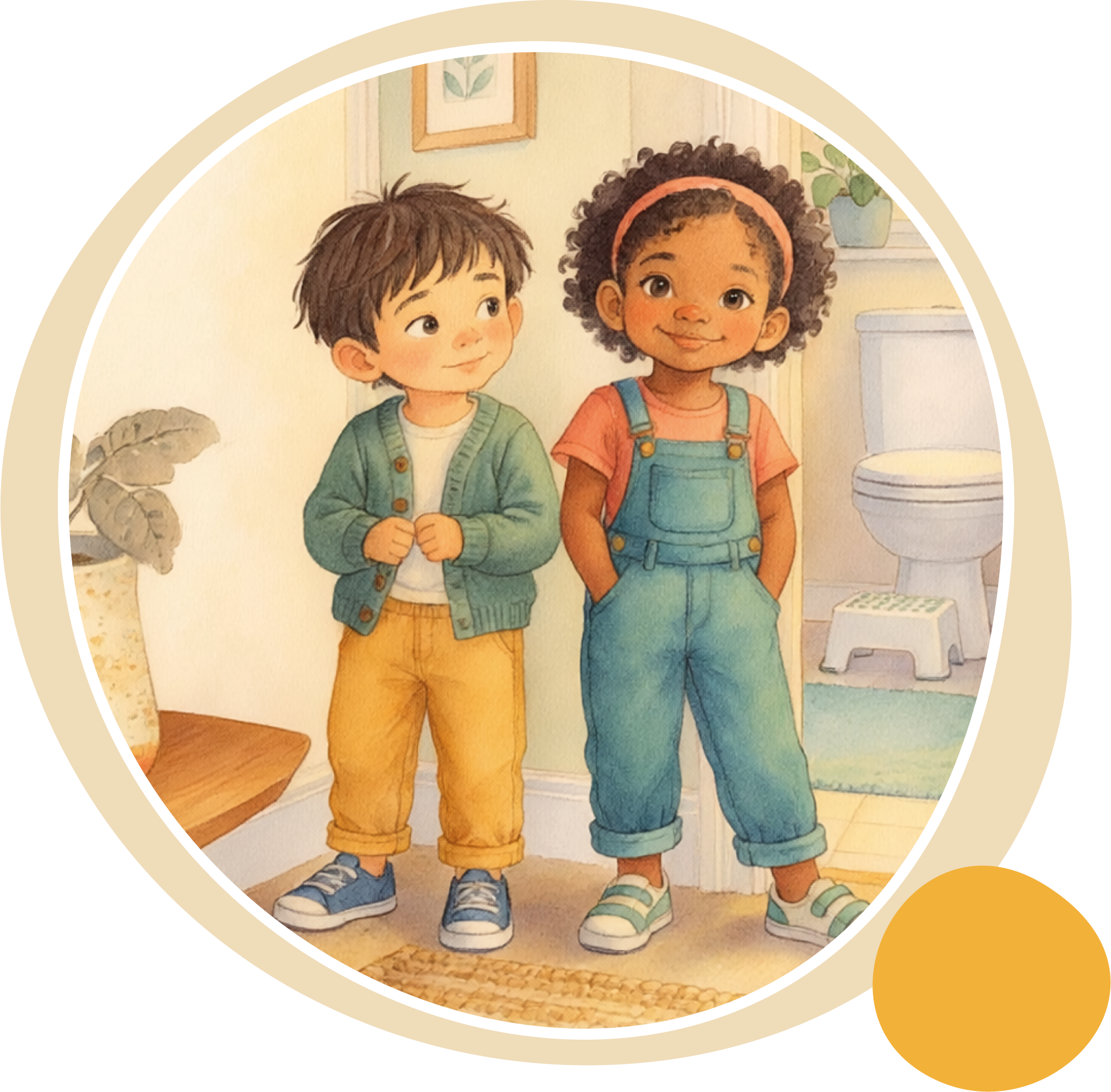
When your child knows what to do but cannot do it
Your child may understand what the toilet is for and they may know where they are supposed to poo.
But when the moment comes, something inside them holds on.

Perhaps your child:
- avoids the toilet or becomes distressed when it is mentioned
- will only poo in a nappy or pull-up
- holds on for days, hides, stiffens or clenches
- says they cannot feel when a poo is coming
- says they do not know how to let it out
- waits until bedtime or until they are asleep
- became frightened after constipation or a painful poo
- makes progress and then becomes anxious again
Perhaps you’ve already tried reward charts, toilet routines, books, reassurance and repeated explanations. And you’re find that your patience and encouragement are getting you nowhere.
Your child isn’t being difficult.
Somewhere along the line, their mind and body may have learned that holding on feels safer than letting go.
Why information alone may not be enough
Most children experiencing stool withholding already know what everyone wants them to do. The difficulty is being able to do it when their body becomes tense and worried thoughts take over.
Safe To Go focuses on the part that information alone may not resolve: fear, avoidance, reduced body awareness and a learned pattern of holding on.
The programme does not begin by demanding a poo or forcing a frightened child through a rigid toilet routine. It helps you reduce pressure and gives your child carefully structured therapeutic experiences through which a different response can develop.
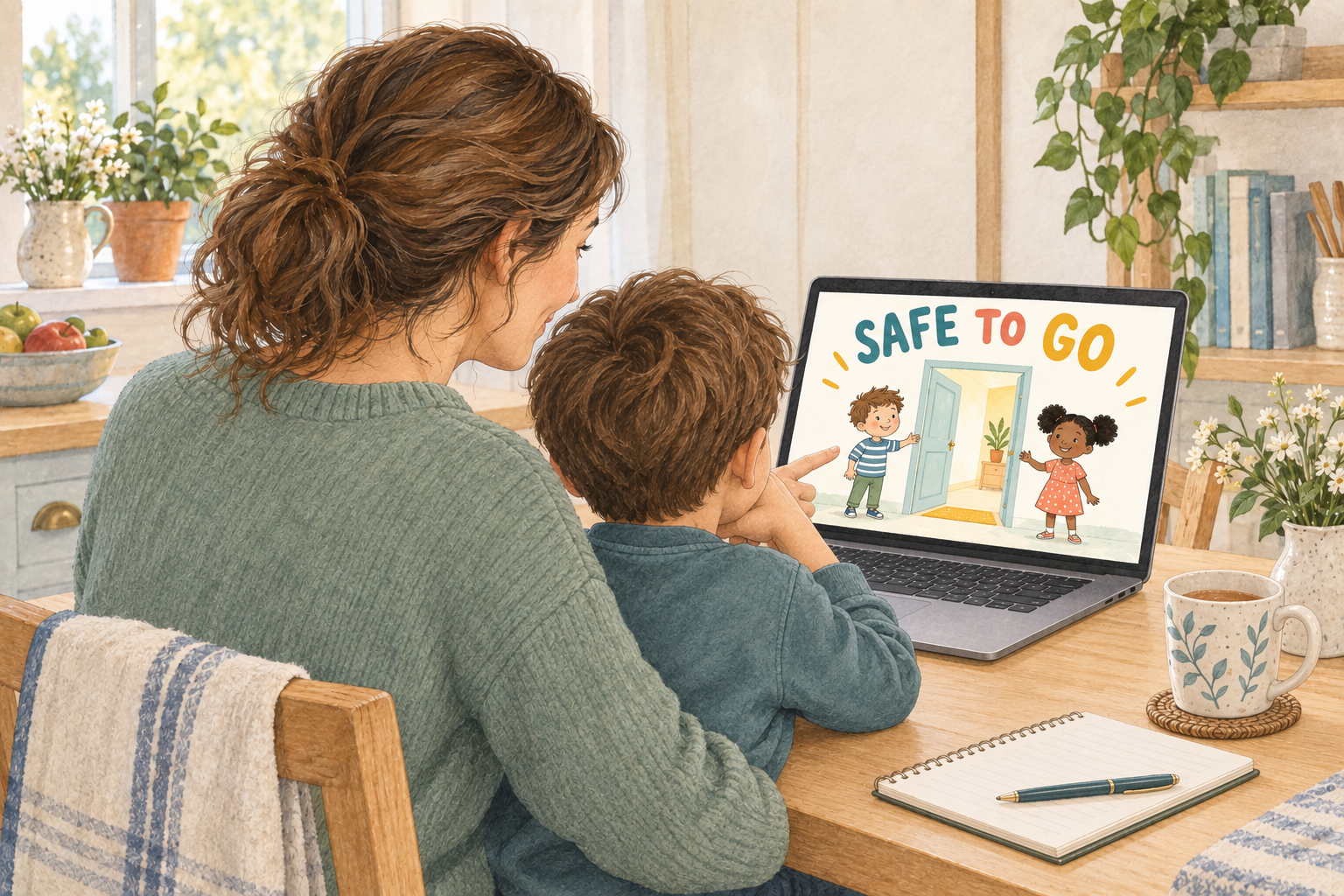
The difficult moment rarely happens while you’re reading an information sheet. It happens in the bathroom, when your child is frightened or refusing to go and you no longer know what to say.
Alicia’s unique Safe To Go programme brings expert therapeutic guidance into your home as she guides you through a step-by-step process. She’ll show you how to introduce each stage to your child, just as if you were having an in-person consultation in her London clinic.
You’ll learn what to say when your child is worried, how to respond without increasing pressure and what to do when progress seems to slip backwards. You’ll not be left with a collection of unrelated suggestions and expected to work out what to try next.
You remain the person your child knows and trusts. This programme provides the therapeutic plan, the language and the child-friendly materials so that we can work on the problem together.
Guidance for the moments when you feel stuck
How Safe To Go helps
Safe To Go combines practical guidance for parents with carefully structured therapeutic work for children. It draws on approaches I use with children and families, including hypnotherapy, NLP, psycho-sensory techniques, body awareness, imagination and mental rehearsal.
Safe To Go does not ask your child to try harder or rely on rewards for producing a poo. Original therapeutic recordings and imaginative activities help them practise feeling calmer, noticing their body and responding differently - before expecting them to manage everything in the bathroom.
Inside the programme, you will learn how to:
- understand what may be keeping the pattern going
- use language that lowers pressure and builds cooperation
- help your child feel calmer and safer around toileting
- develop your child's interoception and awareness of everyday body messages
- introduce new experiences through imagination before expecting them in real life
- move towards comfortable toilet use through small, manageable practice
Your child is not expected to confront everything at once. The work is introduced progressively so that confidence and familiarity can develop before the next step is added.
Parents are guided too. You will know how to prepare, how to introduce the material and how to continue without turning every conversation or visit to the bathroom into a test.

Gentle practice without pressure
For some children, simply being in the bathroom or sitting on the toilet has become uncomfortable. Practice can begin with very small steps.
A child may initially sit for a short time while fully clothed, without being asked to do a poo. The purpose is to build familiarity and safety. Progress is not measured by forcing an immediate result.
The pace can be adapted to your child's current level of confidence. They are helped to move forward, but they are not pushed into a confrontation with the toilet before they have developed the skills to manage it.

What you will receive
When you join Safe To Go, you will receive:
- a complete parent video programme with step-by-step guidance
- clear examples of what to say and how to respond
- child-friendly anxiety-reduction and body-awareness activities
- a collection of original hypnosis-based therapeutic recordings and videos
- guided mental rehearsal and shorter practice material
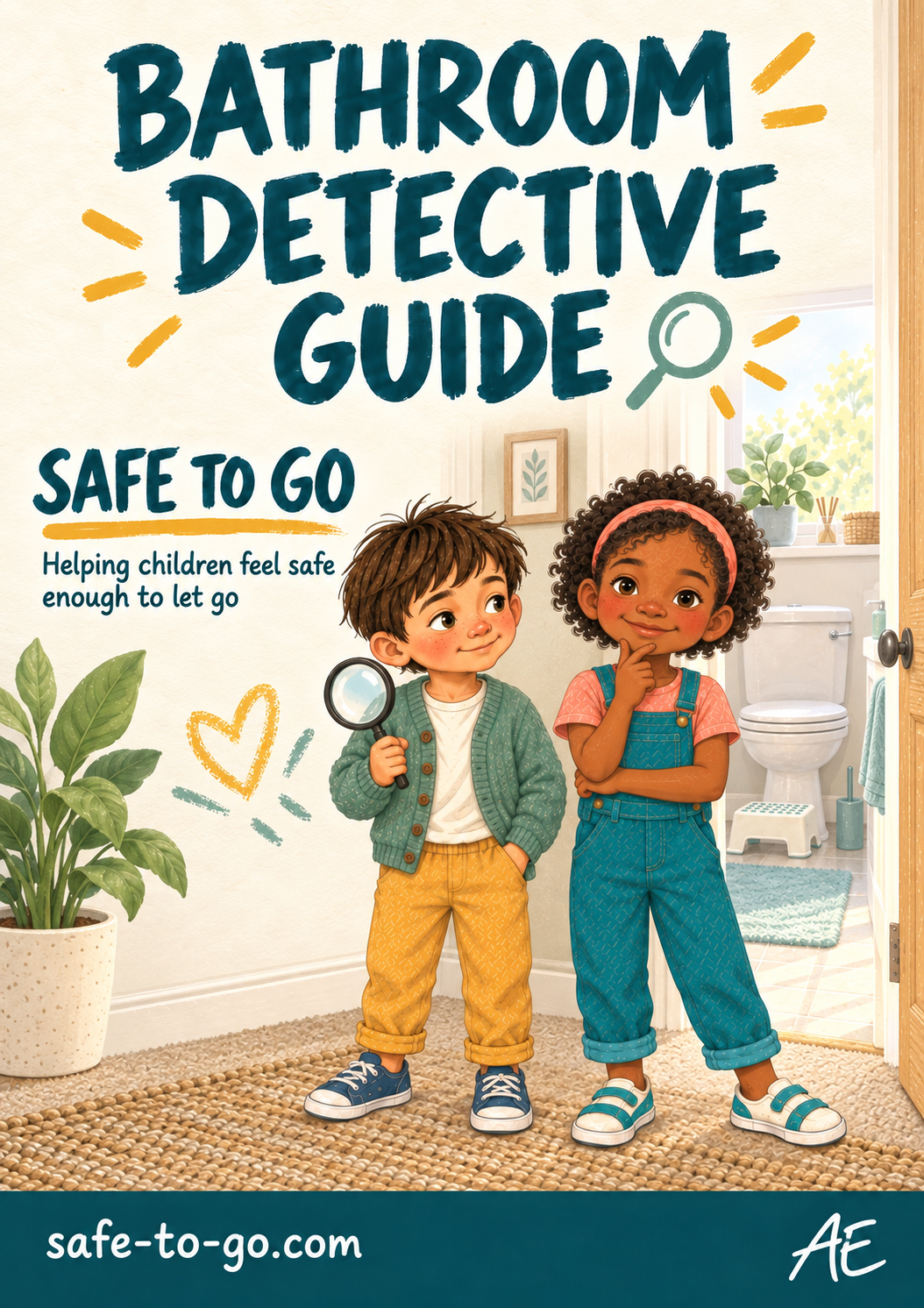
- printable resources to help you introduce and follow the programme
- guidance for recognising progress and deciding when your child is ready for the next step

Who Safe To Go is for
Safe To Go is designed for children of all ages who are anxious about using the toilet, withhold poo, rely on a nappy or pull-up, struggle to notice body signals or have become caught in a pattern of fear and avoidance.
It may be especially helpful when your child needs a gentler, more imaginative approach. Selected material can also be adapted for older children and teenagers using age-appropriate language and imagery. Additional hypnosis recordings are provided for teenagers.

About Alicia Eaton
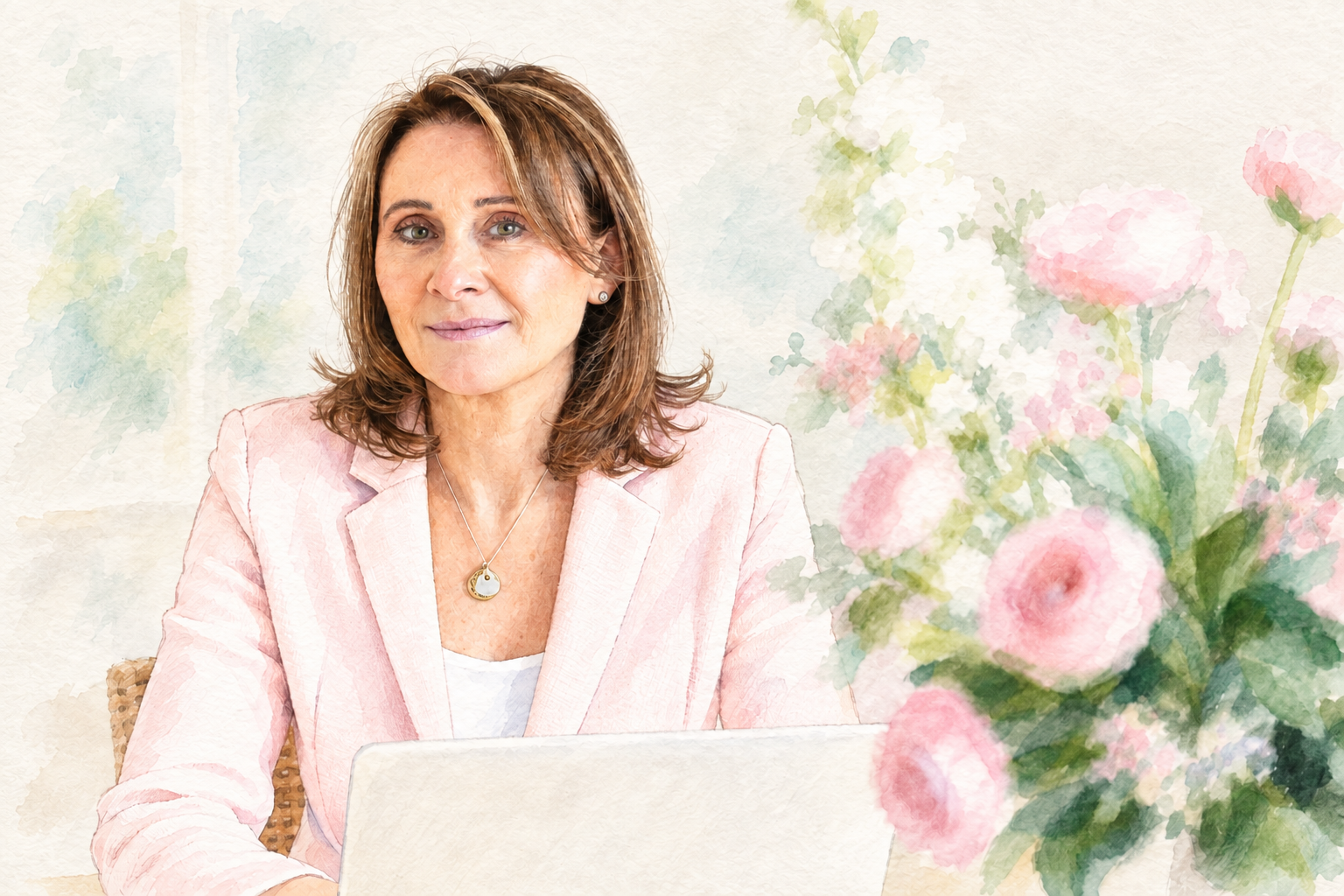
Alicia Eaton is an award-winning Harley Street behavioural psychotherapist, hypnotherapist and parenting author, including the best-selling ‘Stop Bedwetting in 7 Days’. For more than 20 years, she has helped children, teenagers and families with patterns that have become stuck, often after conventional approaches have not produced the progress they hoped for.
Her work combines Montessori philosophy, behavioural psychotherapy, hypnotherapy, NLP, psycho-sensory methods which all create her unique approach.
Medical and physical care
Safe To Go addresses the anxiety, avoidance and learned behavioural patterns surrounding toileting. It does not diagnose or medically treat constipation.
Ongoing constipation should be appropriately assessed and managed with advice from your child's GP, paediatrician, pharmacist or bowel and bladder professional, including advice about laxatives, diet, fluids and any other treatment.
The programme is designed to work alongside appropriate medical care. Do not stop or alter prescribed medication without advice from the healthcare professional responsible for your child's treatment.
Frequently asked questions
My child will only poo in a nappy
Your child will not be expected to give up the thing that currently helps them feel safe on the first day. The programme helps you reduce anxiety, introduce new skills and move forward from your child's current starting point. Advice is given on how to help your child transition out of a nappy.
My child says they cannot feel a poo coming
Safe To Go includes visualization techniques to help children with interoception, using progressive body-awareness work that begins with familiar, everyday sensations. If a medical or neurological condition may be affecting sensation, seek individual professional advice before relying on the programme.
Does the programme use hypnosis
The therapeutic recordings use child-friendly hypnosis, guided imagination and mental rehearsal. Children remain able to move, speak, open their eyes or stop listening whenever they choose. To the child, the recordings feel like imaginative experiences; the parent guidance explains how and when to use them.
What if my child cannot visualise
Imagination does not always mean seeing a clear picture. A child may imagine through feelings, sounds, ideas or simply a sense of knowing what is happening. There is no single correct way to respond to the recordings.
Is Safe To Go suitable for autistic or neurodivergent children
Every child has an individual communication, sensory and developmental profile and this programme has been created with this mind, so it will be suitable for all children.
How quickly should we expect progress
Children respond at different rates. Some connect quickly with one particular idea or recording and you may see benefits straightaway; others need repetition and gradual practice. The programme gives you a structured process to follow without pressuring your child to produce an immediate result.

Coming soon