

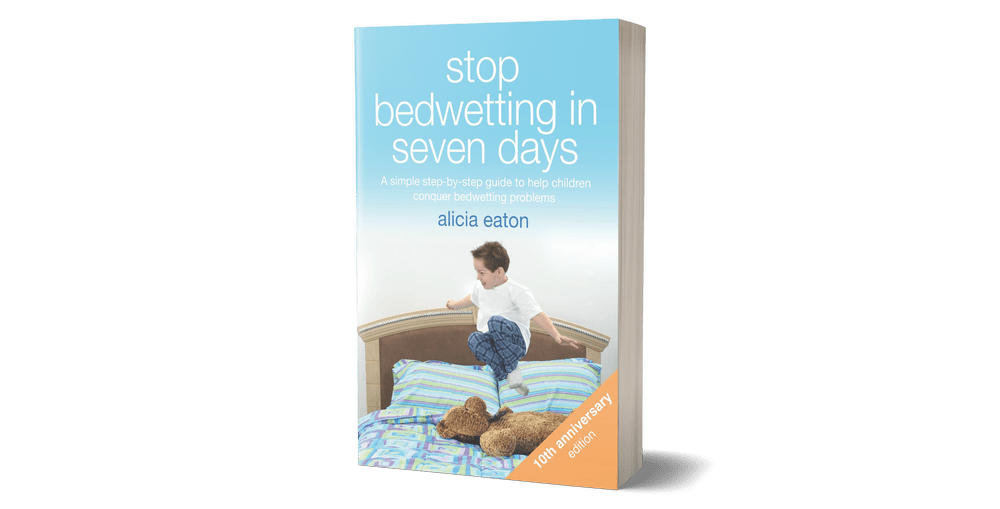
Stop Bedwetting in 7 Days
The international best-selling programme
Bedwetting solutions: understanding the causes and how to help.
Practical, psychologically informed help for bedwetting in children, teenagers and young adults.

Bedwetting can feel exhausting and confusing - but it is treatable. Whether your child is in primary school or the teenage years, understanding the underlying causes is the first step toward dry nights.
I’m Alicia Eaton, Behaviour Change Therapist based in Harley Street and author of the international bestselling book ‘Stop Bedwetting in 7 Days’, recommended by NHS clinics and paediatric specialists worldwide. For over 20 years, I’ve helped families resolve bedwetting using a calm, structured psychological approach.
About ‘Stop Bedwetting in 7 Days’
My book has been a consistent best-seller for over 15 years and is recommended by NHS hospital clinics, doctors and paediatricians around the world.
It takes a different approach to bedwetting.
Rather than “training” the bladder with alarms or suppressing urine production with medication, it focuses on improving how the brain and body communicate at night.
My approach focuses on:
Helping parents understand what to do and what to say to benefit their child.
How to give emotional reassurance, building confidence and self-belief.
Improving the child’s internal awareness of bodily signals known as ‘interoception’.
Changing the habitual patterns of bedwetting stored in the subconscious mind.
Using age-appropriate visualisation and behavioural change techniques.
Night time guided meditations to promote better sleep patterns.
This type of training is particularly well suited to children and teenagers because it does not rely on reasoning, reward systems, or punishment, and it avoids placing blame on the child.
Already reading the book and following the programme?
Here are the resources that you need.

Your FREE downloads:
Bedtime hypnosis audio ‘Dry Beds Now’ - use from Day 5.
Toilet guide to ensure good habits are in place.
Guide to Food & Drinks - which to avoid and which to eat more of.
28-Day Success Diary to keep you on track.
Start using them tonight and help your child move one step closer to dry nights.
Testimonials
“I have used Alicia’s programme with a number of patients and thoroughly recommend it. It is a safe and very effective method of treating this embarrassing problem.”
GP and NLP Trainer
“Stop Bedwetting in 7 days is a very good book. I have found it to be clear and effective and indeed recommend it to a number of my patients who feel it’s very useful. A useful addition to the tool box.”
“I have no hesitation it recommending this programme to parents and clinicians as an approach to explore before more traditional and invasive remedies are considered.”
GP and Integrated
Health Care Practitioner
Bedwetting can feel overwhelming - but it is treatable.
Whether you’re a parent looking for answers, or a young person searching for understanding, you’ve come to the right place.
Bedwetting - also known as nocturnal enuresis - is more common than many families realise. Most children grow out of it naturally, but for some, it continues into later childhood and the teenage years.
This doesn’t mean the problem is permanent. With the right guidance, it can improve and resolve.

What Is Bedwetting?
Bedwetting happens when a child or teenager empties their bladder during sleep without waking.
It is not due to laziness.
It is not a behavioural refusal.
And it is not a reflection of parenting success or failure.
It is usually the result of a combination of:
✔ Bladder development and signalling
✔ Sleep patterns
✔ Nervous system communication
✔ Emotional stress
✔ Learned night-time habits

Why Bedwetting Happens
There is rarely just one single cause. Most of the time, several factors contribute together:
1. Bladder Development
Some children’s bladder development is slower meaning the quantity of urine they’re able to hold overnight is not as great as other children’s.
2. Brain-Bladder Communication
The brain needs to perceive a full bladder in order to trigger waking - this takes time to develop but can be speeded up through visualisation exercises.
3. Sleep Regulation
Night-time sleep stages influence your child’s ability to wake up easily and some children slip into very deep sleep cycles, but this can be improved.
4. Diet and Constipation
Caffeine, sugary drinks, energy drinks and constipation can irritate the bladder or reduce capacity.
5. Hormone Patterns
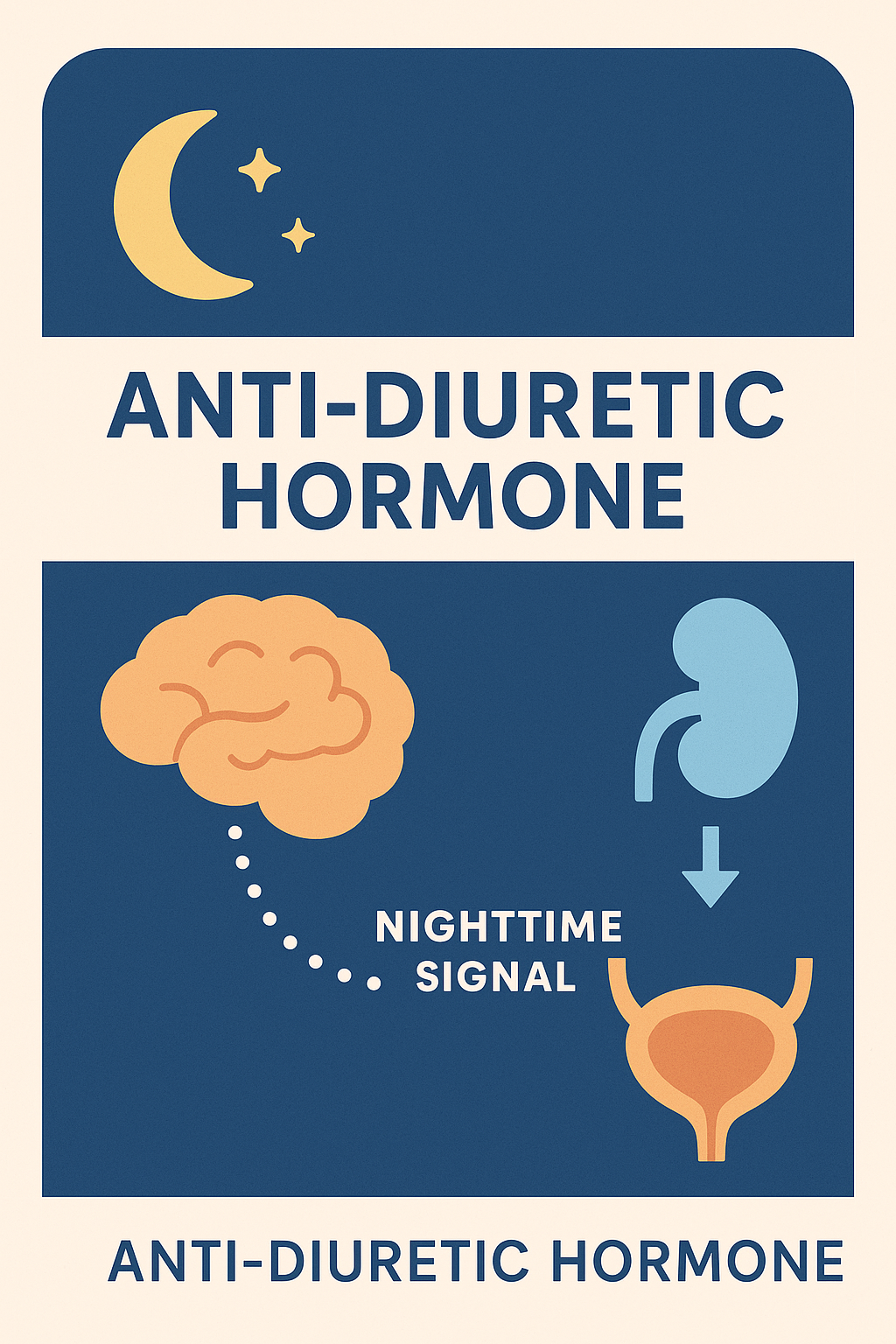
The body normally produces less urine at night thanks to a hormone called vasopressin which acts like an anti-diuretic and it’s possible your child’s body is not producing enough.
6. Emotional Stress or Anxiety
Stress doesn’t directly cause bedwetting, but it can worsen sleep patterns and bladder tension.
7. Habit-Based Patterns
After years of repetition, the nervous system can form a night-time pattern that is difficult to shift without targeted retraining.
Primary vs Secondary Bedwetting
Primary Enuresis
This is what we call the type of bedwetting when someone has never had a period of long dry nights. Most children fall into this category - they simply haven’t got dry at night yet and it’s an ongoing problem for them.
Secondary Enuresis
This is when bedwetting comes on unexpectedly after a long period of dryness or in someone who doesn’t usually have this problem. So something else has caused it - the bedwetting is secondary.

When Should You Contact Your GP?
Speak to a healthcare professional if any of the following are present:
• Bedwetting started suddenly
• There are daytime accidents
• There is pain or burning when passing urine
• There are signs of constipation
• There are general health concerns
Often, medical tests come back normal - which simply means that a behavioural approach becomes the most effective next step.
Why Alarms and Medication Don’t Always Work
Bedwetting alarms and medication can have purpose in some cases - but they often address symptoms, not the cause.
They don’t always work because they:
✔ Don’t retrain how the brain and bladder communicate
✔ Don’t address the emotional stress around bedwetting
✔ Don’t change subconscious night-time patterns
For many families, especially with older children and teenagers, a deeper behaviour change approach is more effective.

The Essential Guide to Bedwetting
A structured, psychologically informed resource for parents and professionals.
This online mini-course is a practical programme that’s designed for parents, teachers, boarding school staff and professionals supporting a child or teenager with bedwetting.
If you’re unsure what to do next - or if you’ve tried alarms, medication or reward charts without success - this guide provides clarity.
Inside, you’ll learn:
• Why bedwetting happens - and why it often persists
• How sleep, anxiety and habit patterns influence night-time accidents
• What to say (and what not to say) to protect a child’s confidence
• Which food and drinks to avoid and which to have more of
• When medical advice is needed - and when behavioural change is more appropriate
Rather than relying on pressure, star charts or outdated methods, this guide explains why a structured approach that works with the brain and body can often be the right solution.
You’ll have guidance on both putting a plan in place to get started and also, how to get things back on track if a pattern of dry nights has stopped. Also included are practical tools to support progress:
• Food & Drinks Diary
• Toilet Guide
• Progress Journal
PLUS: A PDF copy of Stop Bedwetting in 7 Days.

Online programme
for kids 5-12
For younger children, bedwetting is usually linked to developmental factors such as deep sleep patterns, bladder capacity and brain–bladder communication. With the right support, most children can learn to stay dry at night.
My structured online programme for children follows the same principles I use in my clinic. Through simple visualisation exercises, guided relaxation and daily step-by-step activities, children begin to understand how their body works and what they can do to help it respond more effectively during the night.
The programme is designed to feel positive and empowering, helping children build confidence while gently retraining night-time awareness.
Want to know more? Click on the button below:

Teen and Young Adults:
Stop Bedwetting Programme
Bedwetting during the teenage years can feel particularly distressing. Many young people work hard to hide the problem, avoiding sleepovers, trips and social situations, which can gradually affect confidence and self-esteem.
Because the teenage years bring additional emotional pressure, the approach often needs to evolve. ‘My Dry Bed’ is a self-paced online programme created specifically for teenagers. It addresses both the emotional and behavioural aspects of bedwetting, helping young people feel more confident and positive before introducing structured retraining exercises.
When teenagers feel calmer and more hopeful, it becomes much easier for the mind and body to work together towards lasting change.
Check out online training programme for teens here